
A secret return: How the otter is reconquering Swiss water bodies
For almost two decades otters were thought to have died out in Switzerland. Thanks to their adaptability, however, they are now making a slow return in and on our rivers – particularly in the Upper Engadine. As a shy loner, though, the aquatic form of marten faces a number of challenges in its return.
The otter has made an impressive comeback in Switzerland. It was officially declared extinct in 1989, but in some regions it had disappeared decades earlier. The shy animal has been slowly returning to Swiss water bodies since 2009 and has now been recorded in six major Swiss rivers: the Aare, Emme, Linth, Rhine, Ticino, Rhone and Inn.
The Upper Engadine as a key territory
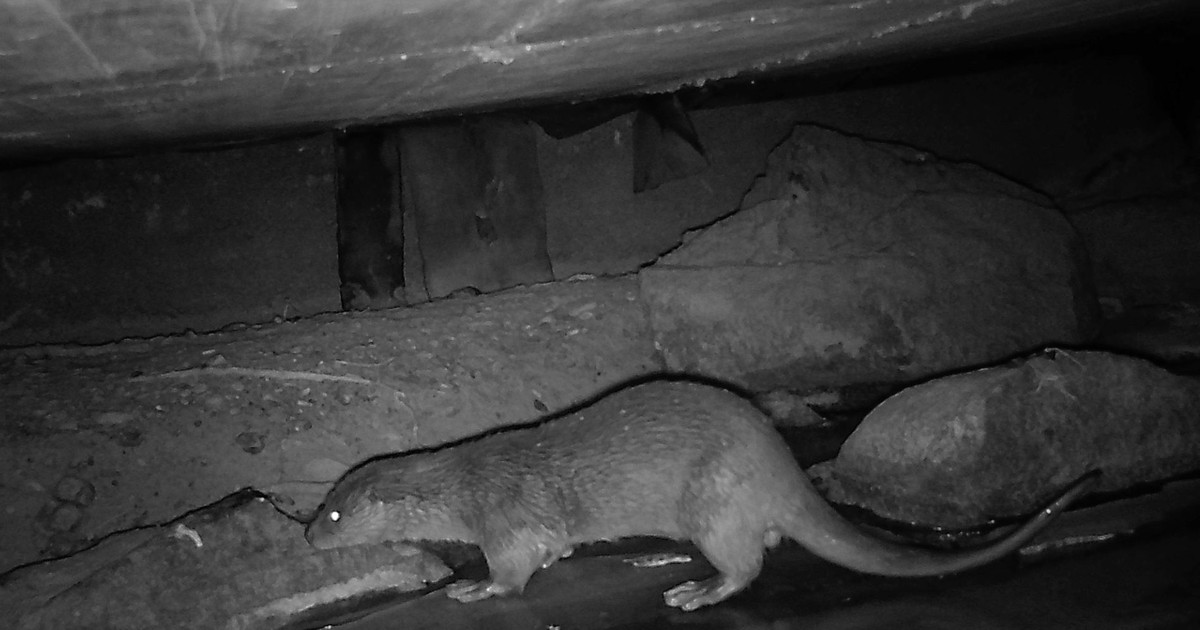
It caused a minor sensation in autumn 2017 when, after decades of absence, an otter was captured on a wildlife camera set up by the cantonal Hunting and Fisheries Agency (AJF) near Samedan in the Upper Engadine.
Since then otters have been a constant presence along the Inn. The Upper Engadine plays a key role in the repopulation of Graubünden, with the first five records of reproduction in the entire canton being documented here. It was not until August 2025 that the Hunting and Fisheries Agency published another report confirming the birth of new offspring.
Perfectly concealed and enormously hungry
The otter is a highly specialised, semi-aquatic carnivore with a body ideally adapted to life in and on the water. What is conspicuous is the arrangement of its sensory organs: the eyes, ears and nose are in a horizontal line. When swimming, it can keep all its senses above the surface while the rest of its body remains concealed.
At the same time, the otter has a particularly high metabolism, requiring a lot of energy, and hence food, compared with land-based mammals. The main item on the menu is fish – an otter can eat up to 15% of its own body weight each day.
Progress is slow
Despite the positive development, otters are spreading only slowly across Switzerland and the population is still in the early stages of establishing itself.
One of the greatest dangers is road traffic, with animals constantly being killed while crossing the road. Initiatives such as the Pro Lutra Foundation’s “Untendurch” project are considering how otter-friendly bridges can be designed so that the animals can cross roads safely.
Another factor is that otters are loners and need large territories. In the Alpine region, this is typically a river between six and 21 kilometres long. By far the main criterion for the colonisation and long-term survival of the species, however, is an adequate supply of fish. This necessitates a functioning ecosystem in which their prey have sufficient habitats for food and reproduction.
Since otters are mostly nocturnal, sleep a lot and react sensitively to disturbance, they are reliant on hiding places above and below ground, which requires natural riverbank vegetation with places of refuge.
Natural water bodies as habitats
Natural water bodies play a key role in the future of the otter, as they promote biodiversity and safeguard both its habitat and its food supply. For humans, that makes the otter an important indicator of the health of rivers. As Cathérine Frick, an academic assistant at the Hunting and Fisheries Agency for Graubünden canton, explains, “as an ambassador for water bodies with diverse fish stocks, the otter can help raise public awareness of measures to restore and revitalise rivers and streams".
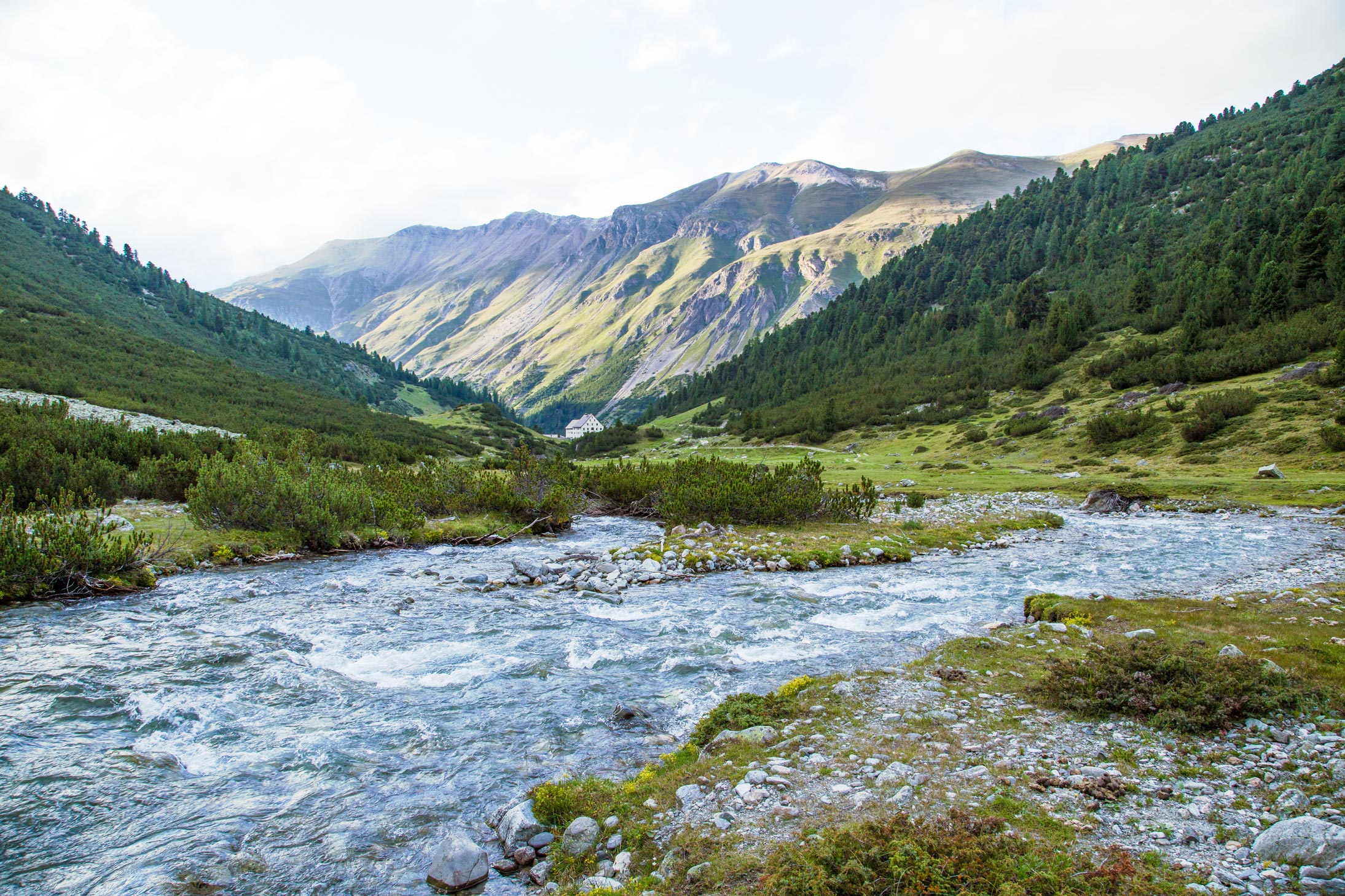
Unspoilt watercourses, such as those recognised by the River Pearls Association with its label, offer particularly favourable conditions for the species. The Beverin and Ova Chamuera, for instance, two mountain streams in the Upper Engadine – both of which are tributaries of the Inn – have been awarded the River Pearls PLUS label. They are located in an area that plays an important role in the return of the otter in Switzerland.