
From river network to life network – why riverbank vegetation is vital for living water bodies
Anyone walking along many of Switzerland’s streams and rivers today will see open, well-maintained banks – free of bushes and trees. No shade, no rustling leaves, no twittering birds. What looks neat and tidy is often a sign of ecological poverty, though. That's because flowing waterways are more than just clean water flowing through a channel: they are diverse habitats embedded in overgrown, structurally rich riverbanks.
Natural state: sheltered water bodies – supported by living riverbanks
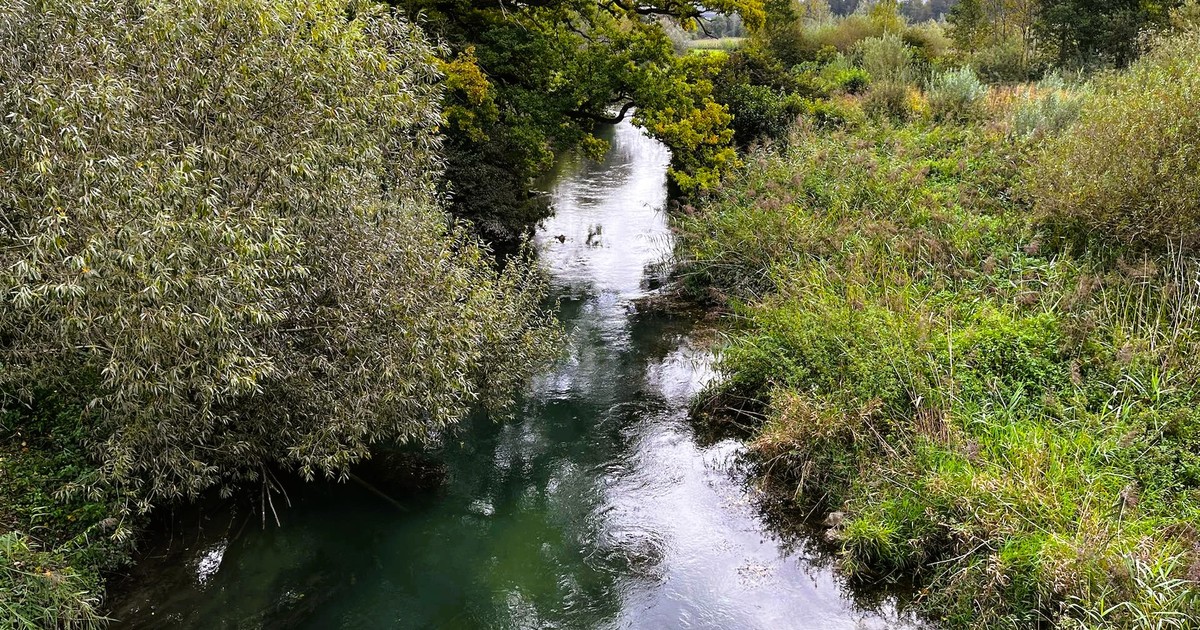
Below the tree line and outside wetlands, watercourses in Switzerland were almost always naturally lined with woody plants. Bushes, shrubs and trees developed along the banks as a result of the interplay between flooding, erosion and sedimentation. This vegetation connected the water body with the surrounding land, creating transitions between aquatic and terrestrial habitats and turning rivers and streams into linear biodiversity hotspots. A water body has never been just a line on a map, but rather a wide, diverse corridor of life.
Lost functions of banks that have become bare
Many riverbanks have since lost this vegetation. Flood defences, reinforcement works and intensive land use right up to the water’s edge have led to the removal of woody plants and a ban on their planting. The consequences are far-reaching: habitats for insects, amphibians, birds and small mammals are being lost, as are cool, damp corridors that remain dark at night and serve as migration routes for shy species. At the same time, the water bodies are losing important functions – from the natural stabilisation of the banks to the filtering of nutrients and pollutants from the environment. Where banks are bare, they lack the buffers that make the water bodies resilient.
Stocking riverbanks: a big impact with little effort
This is precisely where there is huge opportunity. The restoration of riverbank vegetation is one of the most effective and, at the same time, simplest measures for protecting water bodies. While this does not mean river pearls can be established everywhere overnight, this efficient improvement creates a variety of habitats in a small space, adds structure to riverbanks and water bodies, connects habitats along the river and helps to provide shade and cool the water.
What is important is that it is designed properly: the aim is not to plant all banks with the same density. Analyses have shown that priority species benefit most from patchy, mosaic-like riverside vegetation. The rule of thumb is to have around 80% shaded sections combined with about 20% open areas.
At the same time, this structural diversity provides places of refuge, cover and cool zones while also maintaining open, warm areas for light-loving plants and animals. In the current reality of our water bodies, “patchy vegetation” means one thing above all else: restocking, restocking, restocking – because the bare patches are already there.
From a cleared space to a living landscape
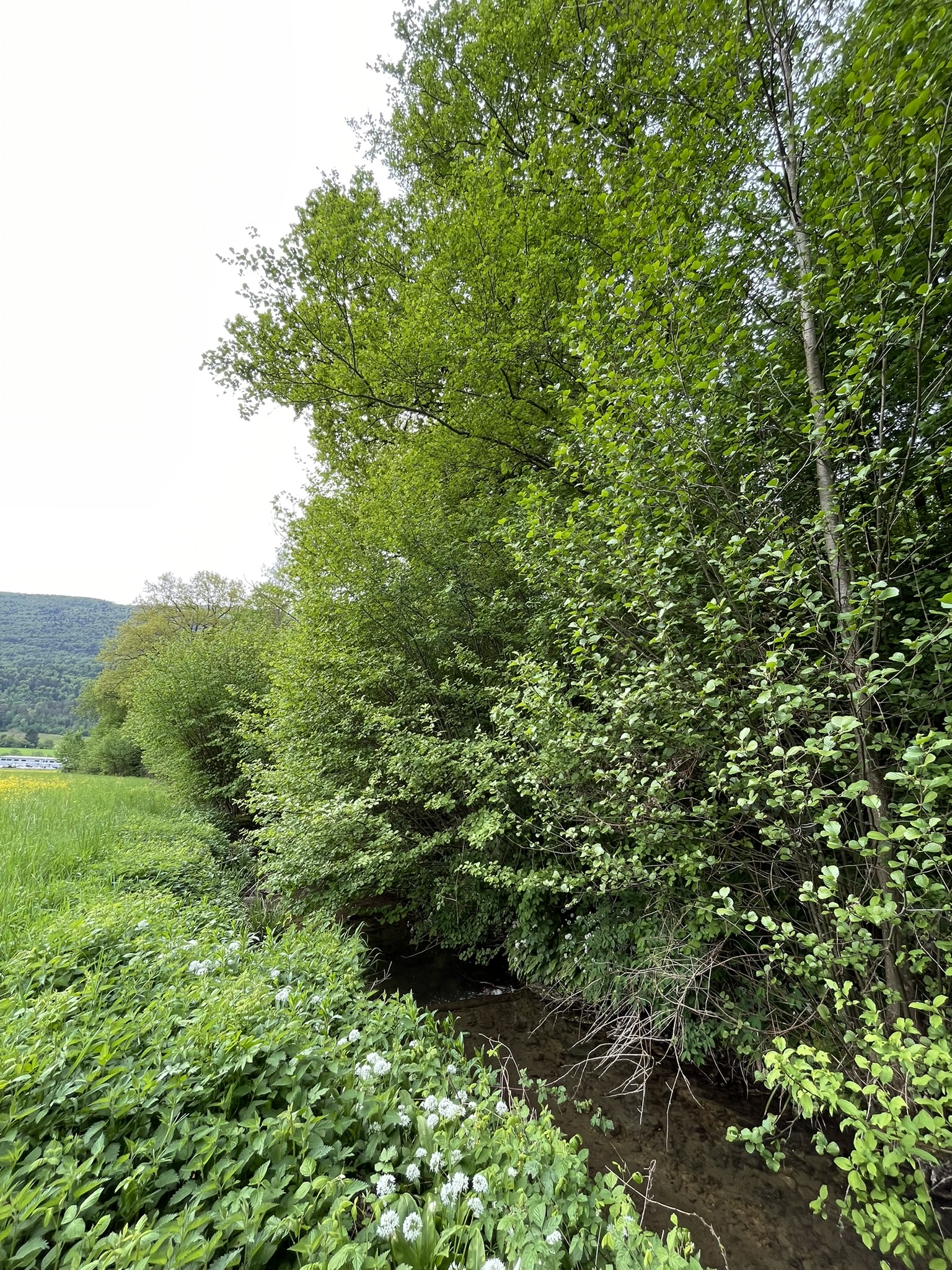
Overgrown riverbanks break up the landscape and provide structure, orientation and a highly localised sense of place. Changing colours, the interplay of light and shadow and the juxtaposition of open and sheltered areas create diverse, vibrant landscapes. Clearing the landscape has resulted in the loss not only of ecological value, but also of a sense of scale and quality of location. Where banks are once again overgrown, landscapes regain their stability and character, defining space, framing pathways and inviting people to linger.
Two pressing problems – one solution
The restoration of riverside vegetation also addresses two of the biggest challenges currently facing our watercourses: pollution by substances, and warming.
In many places, nutrients, pesticides and other micropollutants run off the surface of fields and built-up areas directly into water bodies. Here, overgrown riverbanks serve as natural filters and buffers. At the same time, water temperatures are rising as a result of climate change. The lack of shade exacerbates this problem, particularly in water bodies of smaller and moderate size. Woody plants on the banks reduce direct sunlight and create vital refuges from heat – a key contribution to climate adaptation.
An opportunity we should seize
The restoration of riverbank vegetation is neither a luxury nor a niche issue. Rather, it is a pragmatic, low-cost and broadly accepted way of improving the quality of our water bodies quickly and sustainably. A great deal can be achieved with little effort, allowing the remaining river pearls to be enlarged again and connected to each other. For living water bodies, for biodiversity and for us humans.