
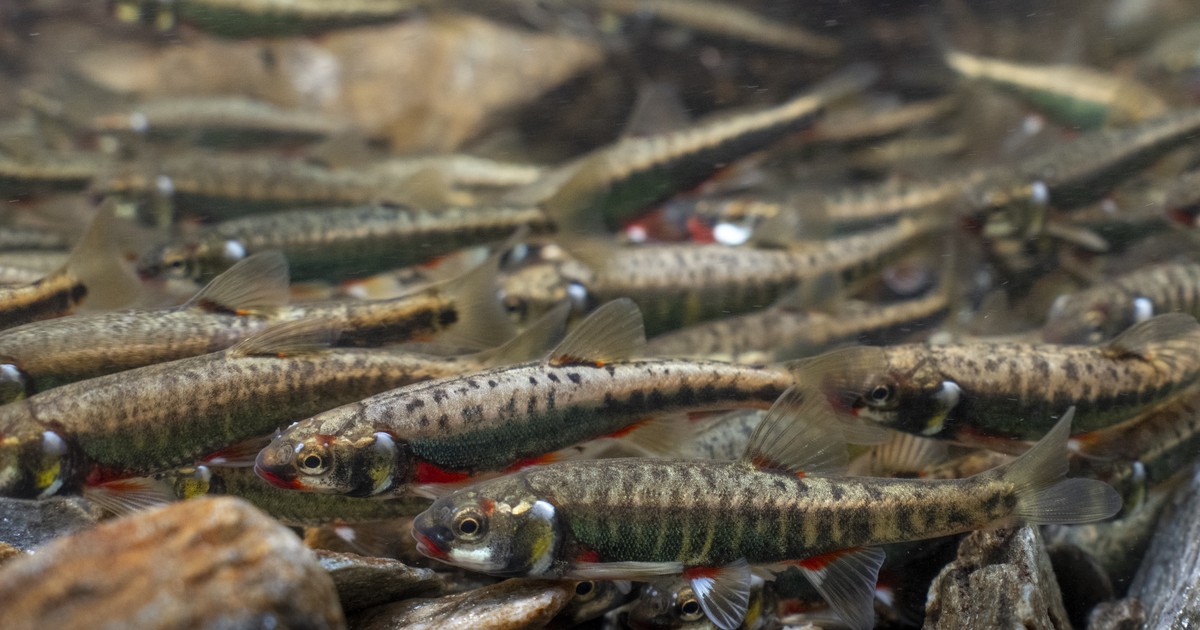
Inconspicuous, yet indispensable: the minnow
For a long time the minnow has played very little part in research and the public eye. Recent findings, though, reveal just how diverse this species actually is. At the same time, its decline highlights how much pressure our water bodies are coming under – and how important even minor species are to the ecological equilibrium.
While the name doesn’t offer any clues, keen hikers will already certainly have come into contact with the minnow – quite literally. That's because it is the little fish that will nibble curiously on your bare toes when you jump into cold mountain lakes. Originally they weren’t even native to high-altitude alpine lakes, having only been introduced to them by people in the Middle Ages.
Unexpected diversity and high standards
This year the Swiss Fishing Association (SFV) has made the minnow its fish of the year. In doing so it also wants to make it clear “how little people know about many fish species in Switzerland – particularly when, like the minnow, they are of no culinary interest,” explains David Bittner, managing director of the SFV. It had long been assumed that there was only one species of minnow in Switzerland. New research, however, has indicated that there are at least four genetically distinct species, each of them adapted to different habitats.
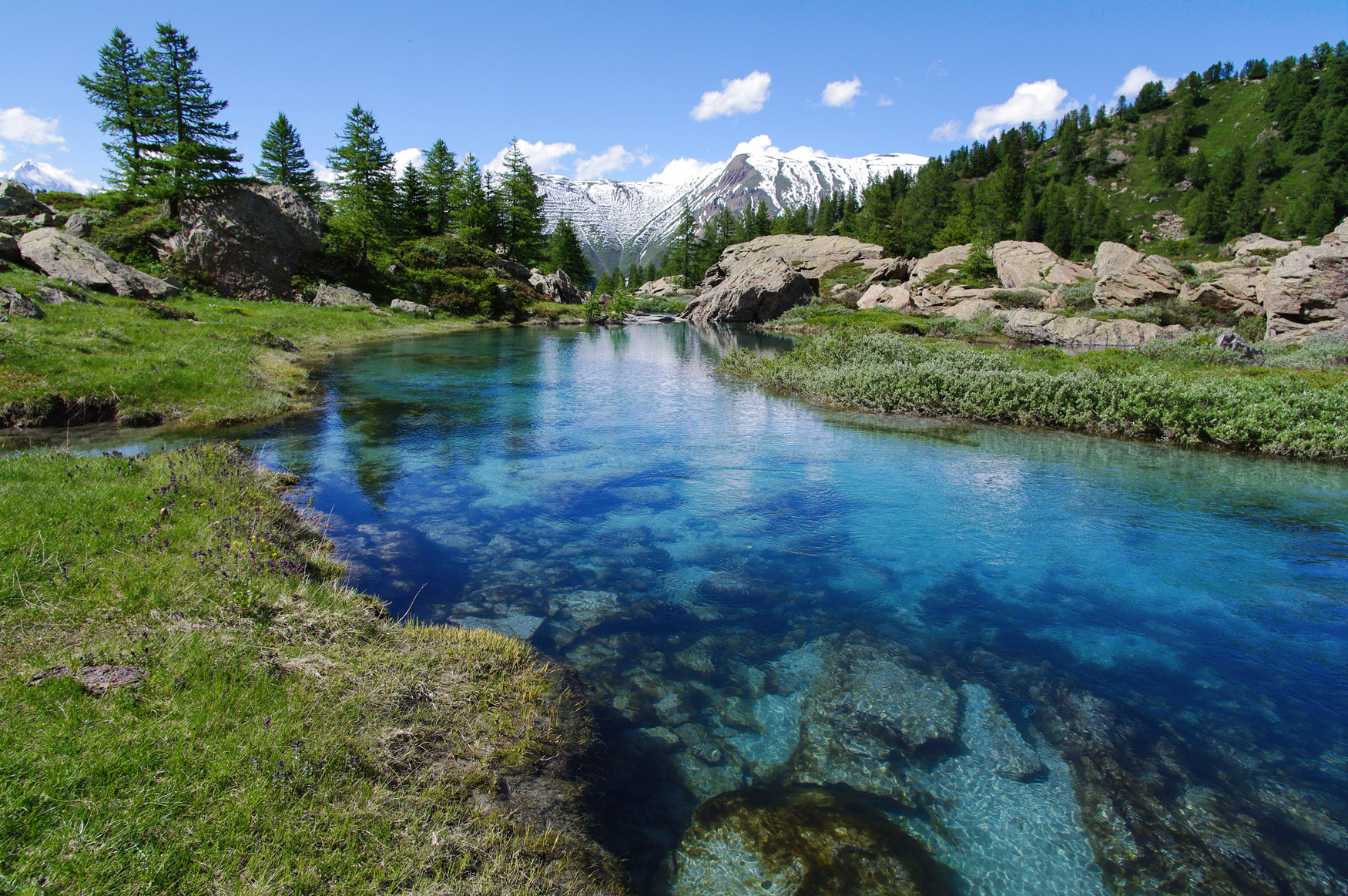
In Switzerland minnows are found in small streams, bog pools, rivers and large lakes alike. They prefer clear, shallow and oxygen-rich water – in lakes and large flowing water bodies they tend to remain near the shore. The critical factor is a structurally rich bed with gravel, boulders, aquatic plants and, especially, dead wood, as these offer protection from predators and suitable locations for spawning.
Scented alarm signals and visual cues
The fish are roughly as long as a human finger and live in large shoals, the dense throng confusing predators. Minnows also protect themselves by a biochemical warning system: if a fish is injured, special skin cells release a substance acting as a sort of deterrent. The others respond immediately with flight and heightened caution.
In the spring or summer spawning season, the otherwise well-camouflaged males transform themselves into strikingly colourful beauties: their lips and belly glow blood-red, their flanks emerald green, and a white rash (spawning rash) forms on their heads, sharpening their responsiveness to touch.
A key link and ecological compass
Over the last 150 years the minnow has disappeared from large parts of the lowlands as a result of hydraulic engineering measures, such as the diversion of streams underground (culverting), the channelling of rivers and the draining of moors. This is exacerbated by the fact that even small barriers in a stream can present an insurmountable obstacle to the comparatively poor swimmers.
Yet the minnow plays a critical role in the food chain: it eats plankton, insect larvae and small crustaceans – and occasionally also preys on carrion, making them reminiscent of tiny piranhas. At the same time, it is a sought-after prey for trout, pike, kingfishers and the water shrew. In the absence of minnows, the entire ecosystem could get out of equilibrium.
Minnows are thus a reliable barometer of water quality: wherever the small fish is found in intact shoals, the water body is usually still teeming with life, unspoilt and structurally rich – exactly what the River Pearls PLUS label protects and honours.