
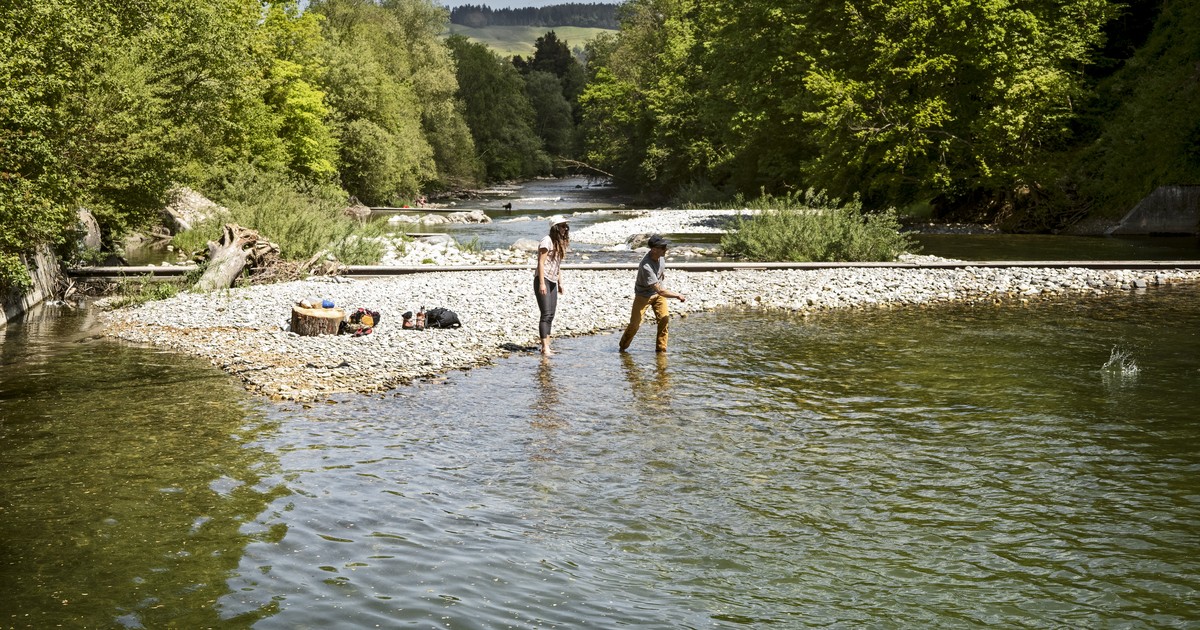
Relaxing by the river: Why natural aquatic landscapes are vital for us humans
Whether babbling brooks or rushing rivers, water exerts a special pull on us humans. The more popular a water body becomes as a recreational area, however, the greater the challenge of protecting sensitive habitats. How Schweizer Wanderwege, the Swiss hiking federation that is a partner organisation of the River Pearls PLUS label, is mastering this balancing act.
Water has been attracting people since time immemorial. Whether a tranquil lake, a meandering river or a wild, rushing mountain stream, natural water bodies are among the most popular places anywhere for people to rest and relax. Untouched or revitalised water bodies are refuges of inestimable value for flora, fauna and us humans. Natural water bodies not only provide a physical basis for life, but also have a demonstrable impact on mental health and our wellbeing. The sound of rushing water, the shifting plays of light, the cooling elements and the natural dynamism of streams and rivers create an environment that reduces stress and helps us relax.
Natural aquatic landscapes meet our needs, whether that is to rest and pause for breath, to exercise in the heart of the natural world or to observe nature. Their high structural diversity – gravel banks, shallows, floodplains, riverbank vegetation and currents of varying strength – creates a broad spectrum of biodiverse ecosystems and richly varied landscapes which also change constantly as the seasons progress. This versatility of form makes natural water bodies particularly attractive to those seeking rest and relaxation, offering them constant variation in their experience of nature, even on repeated visits.
The balancing act between enjoying nature and conserving nature
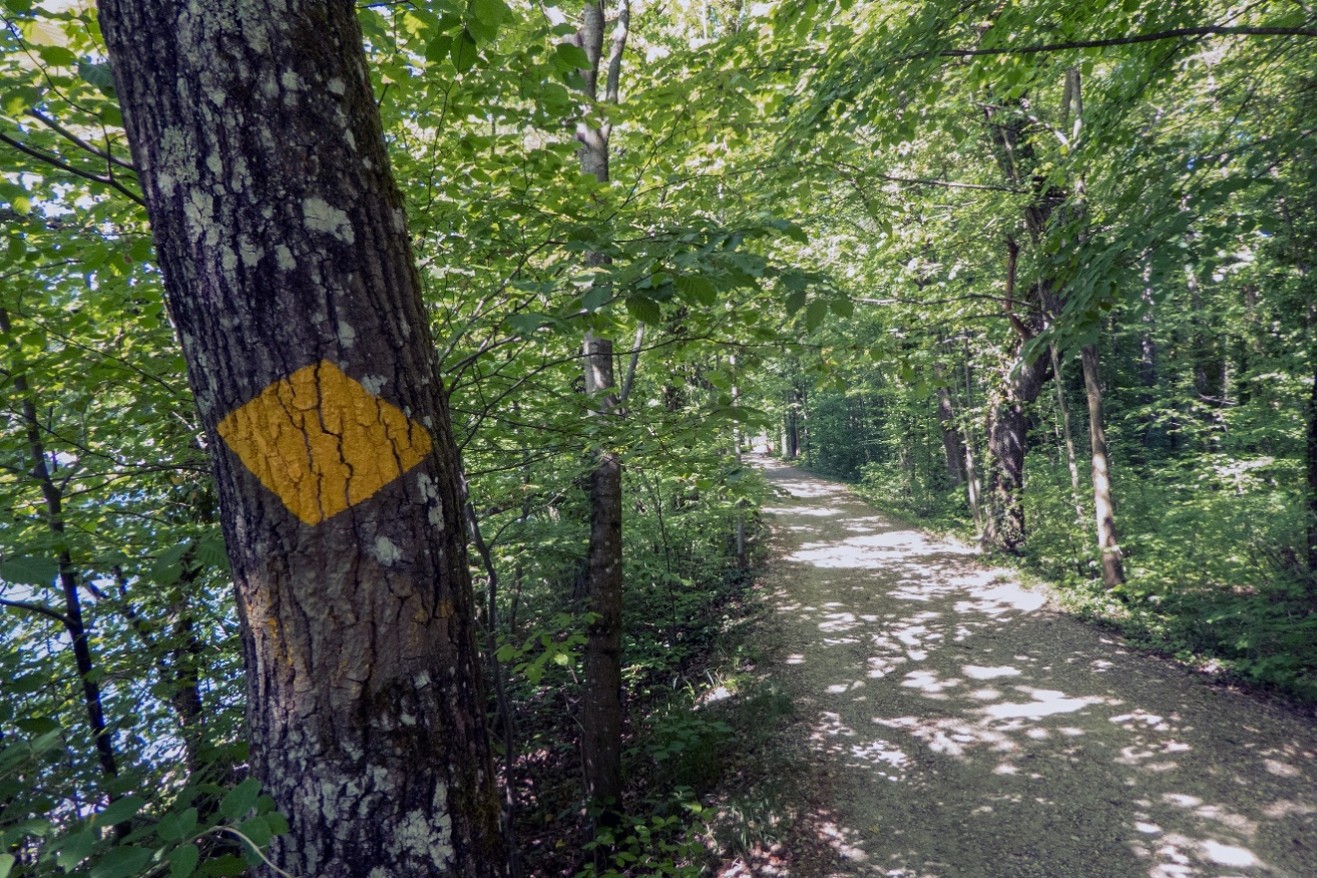
As location-specific facilities of public interest, hiking trails are one of the few types of infrastructure in Switzerland that are permitted in water corridors and provide space for people seeking recreation to enjoy outdoor activities. Routes running alongside water bodies are also a specific component of the quality objectives pursued by Schweizer Wanderwege (in German) as it seeks to enhance their recreational value. At the moment, around 10% of the hiking trail network, i.e. some 6500 km, runs alongside water bodies. The possibility of direct proximity to water considerably heightens the appeal of a hike, particular with increasingly high temperatures in the summer season. At the same time, though, riverbanks are often particularly sensitive ecological habitats. This combination presents those responsible for cantonal trails with a challenging task: to enable attractive hiking experiences while simultaneously protecting sensitive natural assets.
The following are among the aspects that need to be considered when planning and designing hiking trails along water bodies:
- Guidance for visitors: An attractive route which takes conservation and breeding areas into account has a guiding effect in itself, enhancing visitors’ acceptance of sensitive habitats.
- Coordination with revitalisation projects: Upgrades to water bodies are often a win-win situation, making hiking trails more attractive and nature easier to enjoy.
- Protection against flooding: Despite increased water flows, paths should remain safe and accessible at all times even when water levels fluctuate.
- Sustainable route planning before major infrastructure development: What those seeking relaxation value first and foremost is a near-natural, low-impact standard of development, i.e. footpaths without hard surfacing. Where paved routes are required, regional or even local building materials should be used to make the construction process more sustainable while at the same time ensuring a natural appearance.
Raising awareness of the need to treat water bodies with respect
The responsibility does not end with the infrastructure, however. Schweizer Wanderwege and its partner organisations are also committed to raising awareness among the population. Even the most attractive trails, after all, can only fulfil their recreational purpose if those using them behave considerately.
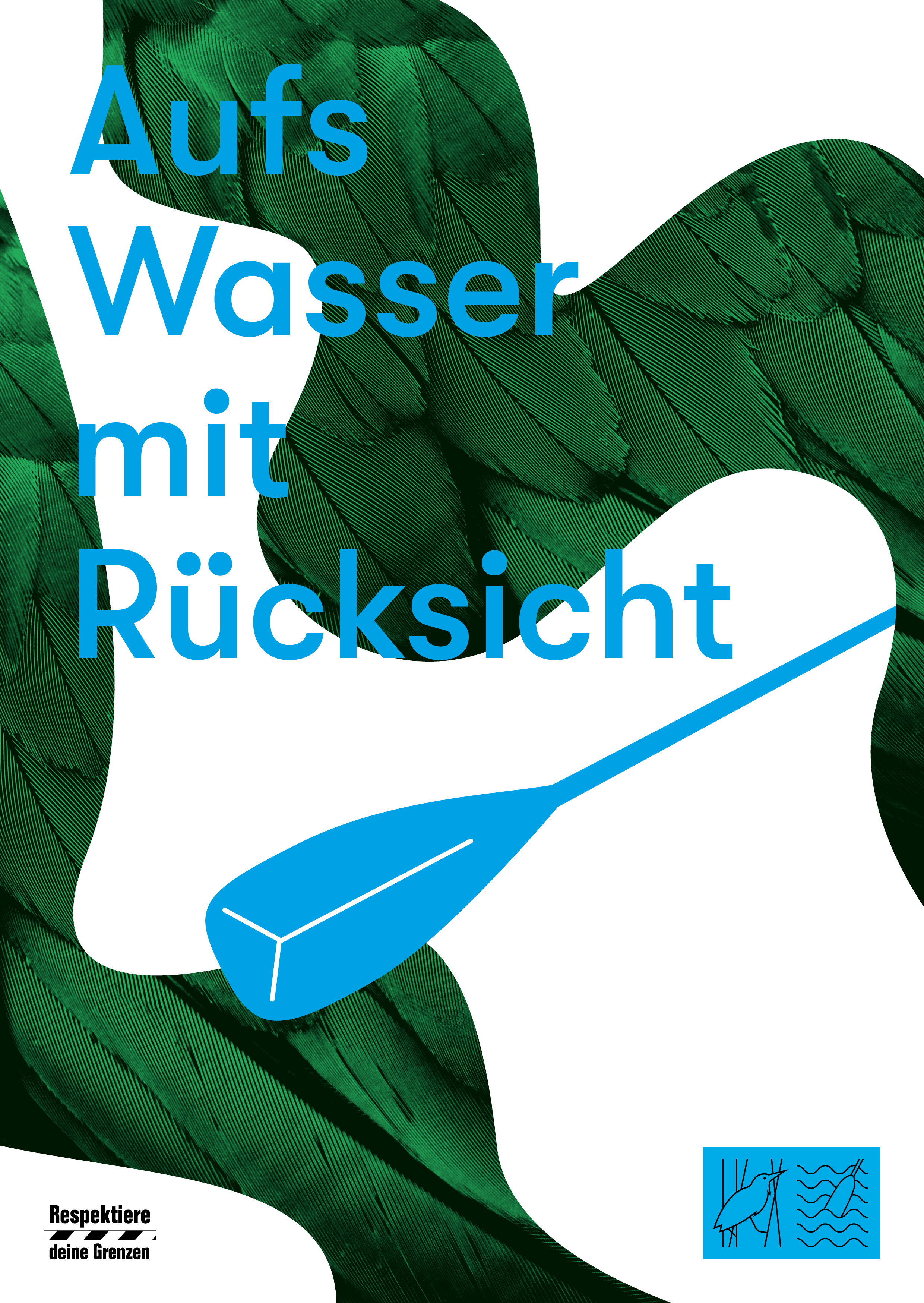
One of the latest examples is the “Take care on the water” campaign run by Verein Natur & Freizeit, a nature conservation association. The campaign raises awareness among watersports enthusiasts and leisure visitors of the need to protect wildlife and sensitive habitats around lakes and rivers. It sets out four simple rules of behaviour:
- Keep away from the reeds
- Avoid gravel islands and sandbanks
- Give flocks of birds a wide berth
- Respect protected areas (keep to the designated routes)
Although the major heatwaves of the year are now over, it also makes sense to refrain from swimming in water bodies that have very low water levels due to prolonged heat and drought. This summer has shown clearly that fish and aquatic life have suffered hugely from the lack of oxygen caused by high temperatures and low water depths, so any additional disruption from people and dogs swimming can have a devastating impact.
Hiking in harmony with the river pearls
Have you read and absorbed the rules of conduct? Then take a look at the magazine of Schweizer Wanderwege covering the topic of water (in German).