
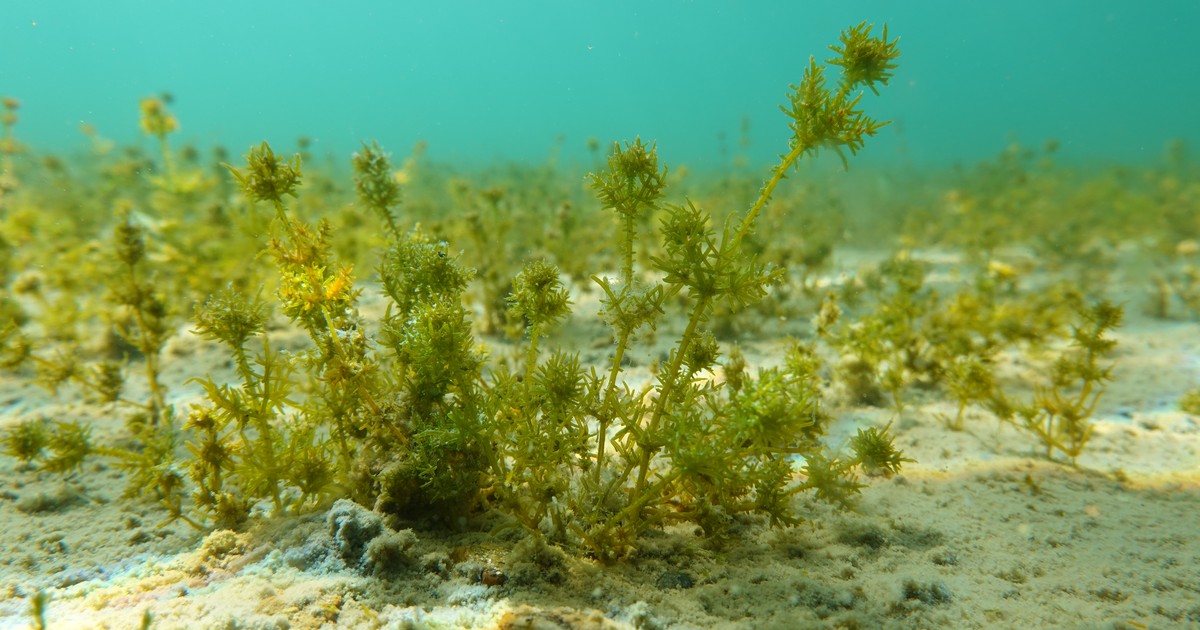
Stoneworts: ecosystem engineers for water bodies
Anyone standing on the banks of an untouched watercourse and looking into its depths will, with a little luck, discover what appears to be a delicate green carpet on the bottom. These are not ordinary aquatic plants, however, but stoneworts (Characeae). Not only is this often overlooked species group fascinatingly beautiful, it also plays a critical role in the health of our water bodies – and it is more under threat than almost any other species group.
In biological terms, stoneworts are multicellular macroalgae. They are true veterans of evolution: fossil evidence shows that their ancestors were already in existence more than 400 million years ago. Corinna von Kuerthy, project manager at UNA Atelier für Natur und Umwelt AG, finds the perennating organs of stoneworts, known as oospores, particularly fascinating: “These have allowed them to survive in the sediment for many years while remaining capable of germinating. If the conditions in a particular river improve, suddenly large stands start appearing again.”
Their German name, which means candelabrum, stems from their unique growth form: the lateral branches are arranged around the main shoot like a candelabrum. This structure makes them unmistakeable, even if determining the precise species usually requires expert knowledge and a good pair of binoculars.
Stoneworts are often an indicator of good water quality – it is not uncommon for the water to be crystal clear. They are invaluable to aquatic environments, because as ecosystem engineers they perform key tasks:
- Nutrient filters: They actively remove nutrients from the water, preventing overfertilisation. At the same time, they are important producers of oxygen.
- Stabilisers: Their dense stands, which often form whole underwater meadows, hold the sediment firmly to the ground. This means that less sludge is stirred up and the water remains transparent.
- Habitat: They also provide spawning grounds, hiding places and food for countless forms of aquatic life.
Various genera of stonewort are found in Switzerland. For example, a stonewort was discovered in Glenner (Glogn) in Val Lumnezia in the canton of Graubünden. Here the water flows through inaccessible gorges and, in its lower reaches, forms valuable floodplain landscapes with gravel islands and pools.
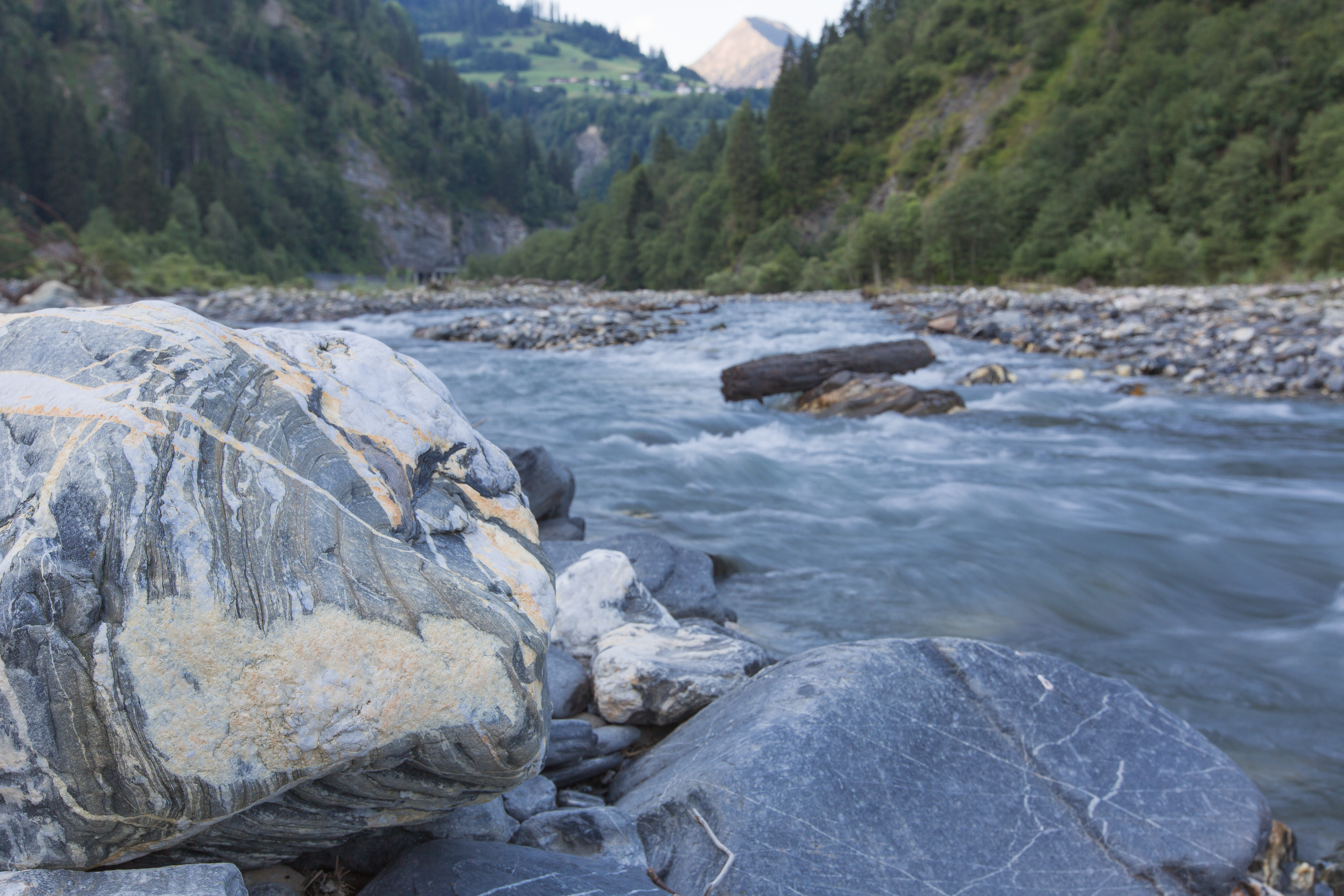
This needs to be protected, because as resilient as their ancestors were over millions of years, today stoneworts react sensitively to environmental change. The majority of the species need clear water bodies that are low in nutrients – whether clear lakes, pools or slow-moving streams.
It is precisely these habitats that are declining, however, with more than 90 per cent of Switzerland’s floodplains having already vanished. As Yvonne Bernauer, project manager at AquaPlus AG, says, there may be extensive stands of stonewort in many large Swiss lakes, but these too are under considerable pressure from human activity. “Originally natural riverbank areas are being built on, and extensive shallow water zones with dense, diverse populations are being lost as a result.” Today, a huge 87% of Swiss stoneworts are on the Red List and considered at risk. The primary causes of their decline alongside the development of river banks are overfertilisation and their displacement by invasive species.
Thus, stoneworts reflect the critical status of our water bodies much more closely than many other groups of organisms. The protection of these water bodies and the revitalisation of lake banks consequently make a major contribution to preserving native underwater vegetation. That is precisely why River Pearls PLUS honours unspoilt streams and rivers in Switzerland – in order to ensure intact habitats for species such as the stonewort into the future.